This episode is a little different.
As I wrote on Friday: this is both a transition and an expansion. Several folks will be stepping up to use this platform and I couldn’t be more excited to hear what comes next.
A platform, now with more places to stand
Archimedes said: “Give me a place to stand and I will move the Earth.” This podcast will become a platform for more people to stand.
The podcast is moving into a multi-host format, and one of those new voices is Matt Boms, Executive Director of the Texas Advanced Energy Business Alliance (TAEBA). Matt has been a leader on some of the most important energy work in Texas: distributed energy resources, affordability, energy waste reduction, grid flexibility, and much more.
How I got “bit by the bug”
Matt asked how I got into energy. The real answer is, slowly and then all at once.
My early work in energy policy was at the Texas Legislature, in a stretch (2005 to 2009) when a lot was happening and the instincts to build and expand were strong.
That period mattered because it shaped a belief I still hold today: Texas works best when we put pragmatism above ideology. Texas is a place to build and do big things.
The next frontier is the grid edge
One of the big themes in this conversation with Matt is that the “cheap electrons” story is true on the generation side, but bills keep climbing because transmission and distribution costs keep rising.
So if we’re serious about affordability, we have to talk about the distribution grid, and the tools that can help us defer (or avoid) some of the costs associated with building out the grid. We’re still going to spend a lot but can we avoid some of it?
That’s where distributed energy resources (DERs) come in, and where Texas has a real opportunity to lead.
Matt and TAEBA recently looked at what DERs could do in Oncor’s territory. The numbers are big, but here’s the one that sticks: about $279 per family per year in savings. If you want a sense of how big a difference that would make for many Texans, check out my discussion with Margo Weisz of the Texas Energy Poverty Research Institute:

There are two core value buckets behind these savings:
Wholesale market value (DERs competing through aggregation, the work ERCOT is already moving through)
Transmission and distribution deferral or avoidance (often the larger, currently under-valued piece)
If we get the policy design right, DERs can help lower system costs, enable load growth, and reduce the pressure that shows up on people’s bills.
Final Thoughts
If you’ve been listening for a while, let the new team (more announcements on that soon) know what topics you want them to cover next.
The next chapter is going to be great. I can’t wait to listen!
Timestamps
00:00 – Introduction
02:30 – Matt asks his first question!
04:00 – Doug’s first energy experiences
05:30 – * Beginner’s mind *
07:00 – Politicization of energy, what brings us together,
10:00 – The need to look for similarities first
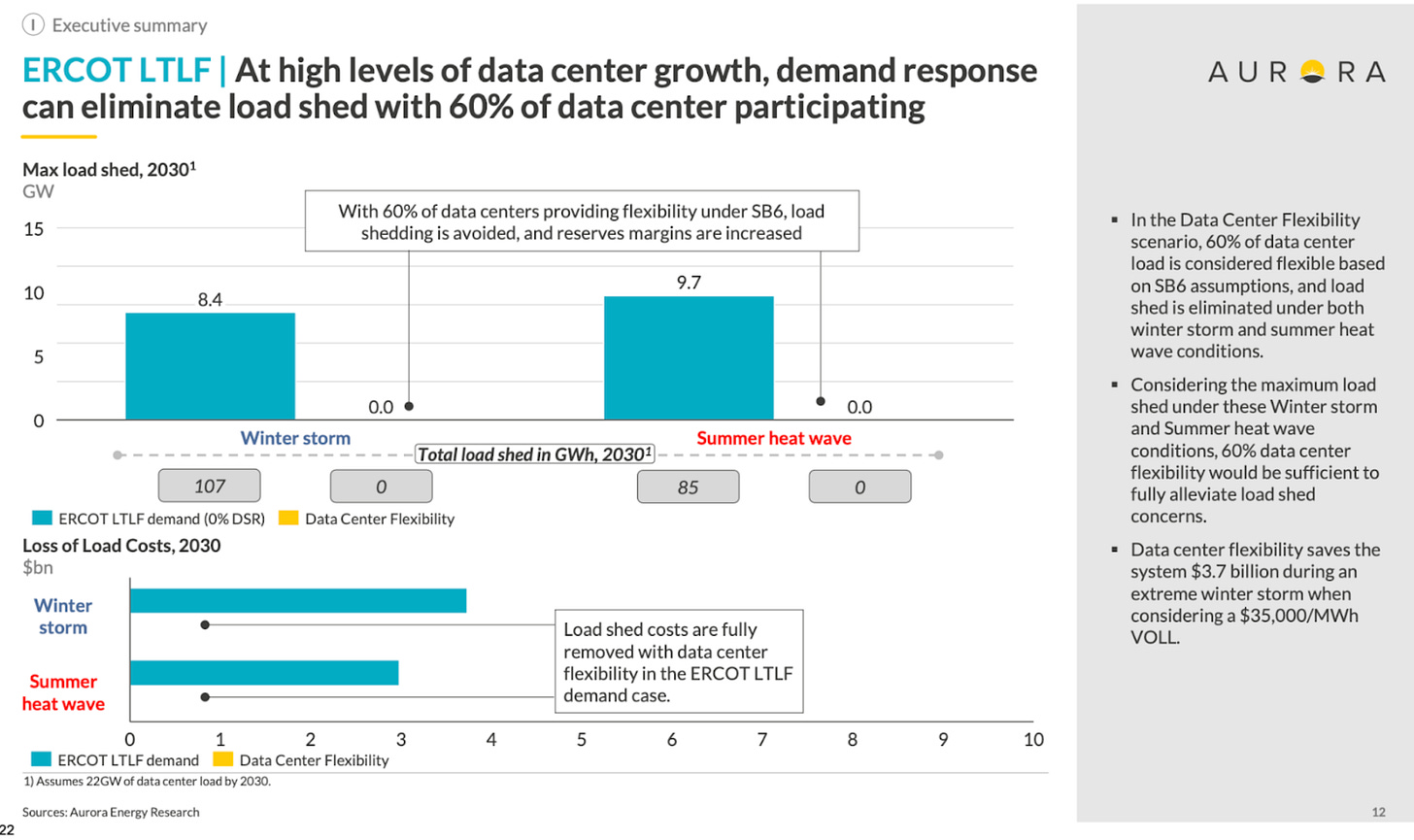
14:00 – How do we meet Texas’ rapid demand growth? (Here’s the slide I was referring to:)
16:00 – How do we continue to grow the economy and electric demand?
18:00 – Distributed energy resources
20:00 – Matt’s work on demand side
23:00 – Distributed batteries can last a lot longer than an hour or two!
25:00 – The TAEBA study showing $2,000 savings per family in DFW from DERs. More on T&D cost avoidance and deferral here:
29:00 – The potential for Texas leadership
32:00 – What does Matt want to cover next?
32:00 – The under-discussed part of the Texas Energy Fund: the Texas Backup Power Package Program for critical facilities
36:00 – Matt’s thank you, Doug’s excitement to stop talking and start listening!


Resources
Guest & Company
Matt Boms - LinkedIn
Company & Industry News
The Value of Integrating Distributed Energy Resources in Texas’ Oncor Territory
New Study Finds Oncor Customers Could Save $8.5 Billion With DERs
Transcript
Doug Lewin (00:04.526)
Welcome back to the Energy Capital podcast. I’m your host, Doug Lewin. Today’s episode is a little different. The platform is expanding into a multi-host format. I’m really excited about these changes. I cannot wait to be a listener to this podcast and hear where it’s going. I’ve been working with your new hosts and there are several on the issues and topics and speakers they’re going to be inviting and I could not be more excited.
Doug Lewin (00:33.504)
about where this is gonna go. I put out a post this morning at the Texas Energy and Power newsletter called It’s a Transition and an Expansion. And that is exactly what it is. Change can be hard, but change can also be really good. And this is an opportunity for a lot of folks to use the platform that I have helped to build. There’s a famous quote from Archimedes where he says, give me a place to stand and I’ll move the earth.
Doug Lewin (01:03.768)
You all, dear listener, come on, it’s the Energy Capital podcast. Y’all, dear listeners, have given me a place to stand, given me a voice, and I’m deeply, deeply grateful for that. Now, other folks are gonna have this place to stand to move the Earth. Stand with them, help them through this transition and expansion, and I know you’re gonna be really excited to hear what comes next. So today, again, this is a little different.
Doug Lewin (01:31.2)
and thrilled to introduce one of the new voices who will be carrying this work forward. That’s Matt Bombs. Matt is the executive director of the Texas Advanced Energy Business Alliance, TABAA for short. They do some great work in Texas and Matt has done some great work, particularly around distributed energy resources. He was part of that aggregated distributed energy resource task force that has had a lot of success in Texas. He’s also part of the advisory committee on the backup power package program I talk a lot about. He was instrumental
Doug Lewin (02:00.138)
in getting the Texas Energy Waste Advisory Committee established here in Texas. So he’s done a lot of great work. He is an expert in his own right. He is very interested and curious about all this stuff, just like I am. And I’m thrilled that he’s one of the people that is going to be stepping onto this platform. So what you’re here today is me interviewing Matt and Matt interviewing me. A little bit of a retrospective looking back. I hope you enjoy this episode and I hope you enjoy all the episodes going forward.
Doug Lewin (02:28.364)
I can’t wait to listen myself and I know you’re gonna like what comes next. So with that, thanks for listening and let’s jump in.
Matt Boms (02:43.352)
Hi everybody, I’m Matt Bombs and I’m here with Doug Lewin on the Energy Capital podcast. Doug, it’s great to have you here on the podcast that you built. And now that I’m hosting the podcast with a few of my very talented and brilliant colleagues, it’s just a great opportunity to pick your brain and to hear more from you. I really do want to hear more about your story and how you first got into energy. What was the key factor that really brought you into this industry and how did you first get started?
Doug Lewin (03:11.522)
Yeah, Matt, before I jump into that, just want to say how thrilled I am to be able to take this platform that I think really is reaching a lot of people that are really interested in Texas energy. Texas is such a dynamic place and you’re such an important part of that ecosystem. And I’m thrilled that you’re excited to step into this role, like you mentioned with some others. So, you know, we, often joke in the energy world about energy transition and energy expansion. This is both, it’s going to be an energy transition and an expansion.
Doug Lewin (03:41.154)
You know, with, new hosts coming in and there’ll be multiple of them that’ll allow more exploration. And I’m just so thrilled you’re in that mix. So thanks, Matt. So to answer your question, it’s something I’ve talked about a little bit on the pod over the years, but not a lot. And yeah, look, I can’t even like tell you like, Hey, there was this moment or this, you know, day or week or month or year where it would like all clicked and like, this is what, like what I want to do with my professional life. It kind of happened over time.
Matt Boms (03:49.59)
Awesome. Thanks so much Doug.
Doug Lewin (04:09.614)
Certainly some of my first experiences with energy policy were at the legislature. And it was a time at the legislature, there was a really good time to be there. It 2005 to 2009. It was just a very different time over there, particularly related to energy policy. So like a lot of things were happening, right? 2005 Senate bill 20, which had an expansion of global portfolio standard, the big expansion of the transmission system commonly known as CREZ, but really that enabled a lot of the economic growth Texas had over the last 20 years.
Doug Lewin (04:39.758)
You know, that was passed in 05, 07, there was a major efficiency bill that was passed then. I had the privilege to work on that. That was with Representative Strauss before he was Speaker Strauss. And then, you know, 2000, when 2008, right, people forget this, but you had both Republican and Democratic candidates running on platforms that were extremely pro clean energy, climate action, all that kind of stuff. And obviously 2009, you had...
Doug Lewin (05:05.166)
President Obama and there was like RF funds and all that kind of stuff. So like, it was just kind of a fascinating time to be in there. Add to that, that like 2005, six Al Gore puts out inconvenient truth and Rick Perry fast tracked 11 coal plants. Now Perry was like, you know, pro wind and solar and pro transmission and pro coal. He’s got to like pro everything, but you know, 11 coal plants, right in the middle of that context of like this dawning awareness around climate change. It was just kind of, it was just a fascinating time.
Doug Lewin (05:33.932)
to be in it and I’ve always found the energy space to be dynamic and fast paced and interesting. And it’s just one of those subject areas that almost any subject areas this way, if you get bit by the bug and you’re into it enough, right? That there’s no like end to learning in it. I always feel that beginner’s mind thing is there that like any corner you turn, it’s like, wow. I didn’t know about that whole thing. Tell me about that. Right. I want to, I want to read up and get smart on that and
Doug Lewin (06:03.406)
after 20 years of doing this, I still have the same feeling. And to your point and your question, like that’s even more so now, right? The acceleration is accelerating, right? So like what I thought has always been a pretty dynamic space, way more dynamic now. And the amount of stuff that we all have to learn just to keep up, right? Not even get ahead, but just keep falling off the back of the treadmill. It’s, there’s so much right now. And I find that challenge of not just keeping up, but like,
Doug Lewin (06:32.962)
that challenge of really comprehending what’s going on, really seeing different stakeholders point of view and how do different entities view this very same problem so differently. So there’s this whole kind of social dimension to the work that I absolutely love as well. yeah, I can’t really like pinpoint a day or a year or something like that. It was just like the ledge through to be in the head of an energy efficiency organization to go into clear result. Everything throughout my career has just added to it and just sort of like.
Doug Lewin (07:01.398)
increased that passion every step along the way.
Matt Boms (07:04.866)
That’s really interesting, Doug, and I am really interested in hearing more about how things got more political. So you started in this role, you were working in the energy industry at a time where these different technologies were all emerging. And at a certain point, the technology itself began being painted as red or blue or whatever color of your choice. And I want to hear more about the politicization.
Matt Boms (07:29.718)
even leading up to Winter Storm Yuri, about how did that change happen and what was it like as someone who was actively working in the industry at that time?
Doug Lewin (07:36.61)
I
Doug Lewin (07:36.71)
think the politicization of energy, you know, is thankfully not as bad as in a lot of other areas, but it has at least tracked, if not equally, but sort of tracked the polarization that is happening in the countries and all. I’ll tell you, one of the, I’m proud of all the podcasts that I’ve done with Energy Capital Podcasts. And I’m going to be proud to hear all the ones you’re going to do. I’m so looking forward to being a listener going forward, but.
Doug Lewin (08:02.646)
You know, one of the ones I’m most proud of was with David Spence and it was about, you know, his book, brilliant book, Climate of Contempt, which sort of was the whole thing is about the polarization of climate policy. And I’ll say, I think that’s actually probably how it became so polarized was like climate change has become very polarized. The things that you wouldn’t have imagined 20 years ago could have become that polarized. know, McCain and Obama both running on doing something about climate change.
Doug Lewin (08:31.608)
Who would have thought like vaccinations would have become as politically polarized as they are. But I will say, I think this is an issue area where you see really, really interesting alliances, left, right, center. And I think it’s because if you can kind of step back and kind of focus on first principles, we all want a reliable and affordable and clean grid. Like I don’t care what your political ideology is. You don’t like air pollution. Like nobody wants to have polluted.
Doug Lewin (09:00.394)
skies and water. Like that’s not something somebody sets out to do. I think in this industry, people are actually pretty mature about understanding that there are trade-offs and that those trade-offs are quite real. And so I think as much as possible, Matt, what I have tried to do, and I hope you’ll continue to do this on this platform, is to dial down that temperature, to have discussions with...
Doug Lewin (09:26.996)
The first question of asking somebody to come on the podcast isn’t what political tribe are you a part of? It’s do you have interesting thoughts on energy? They may not be the same as my thoughts on energy. I actually hope they aren’t because if we’re only talking to people we agree with 100%, like what’s the point? I mean, you know, some of it is to explore differences. Some of it is just to learn from experts that know, you know, that’s been my great joy in doing this is having people on that know so much more than me that I can ask questions of.
Doug Lewin (09:57.014)
and get smarter and help the audience get smarter too. And I’ll tell you, I mean, I’m just so excited about some of the possibilities of, you know, cross ideological cross partisan. And I don’t even want to just say bipartisan. Like it could be all kinds of different beliefs that if you come to this from, want cheap, fast, reliable, clean power. Like
Doug Lewin (10:22.764)
Let’s talk about what are the things we can do to get all those. know, competition, right? That’s one of those places that like, you know, you get broad agreement in general, not a hundred percent, but broad agreement left and right that like competition is generally a good thing, particularly on the right, which has made things like really, really interesting in Texas. So I think as much as possible to depoliticize it, to dial the temperature down, to look for areas of commonality, you know, it’s interesting.
Doug Lewin (10:52.29)
Chairman Flores of ERCOT gave a speech at, I think it was at Gulf Coast Power Association where he talked about like, can we look for our similarities first and our differences next? And I just think that’s so powerful. And I’ve always tried to do that in my career, like connect with somebody first and then explore the differences. I think too many people are just leading with their differences. And like that’s on a human level makes it very hard to work with anybody.
Matt Boms (11:18.286)
Yeah, I completely agree with you. And that is not limited to energy, right? We’re seeing that across our entire society. And I think you said at the outset that speaks to kind of your curiosity as a person, but the fact that you’re not married to your ideas, right? Things change. We’re constantly learning. A lot of these concepts are new and emerging. AI is only beginning to emerge as this new pillar of society. We’re all going to have a lot to learn here.
Matt Boms (11:46.508)
moving forward. I think that at the outset, if we can just drop our prior set of expectations and maybe any biases that we have, that will help us all come together and work in a more productive way. And I certainly think that what you mentioned about competitive markets being, know, historically Republican principle in a Republican state, that was probably the single biggest factor in the renewable industry having success in Texas and continues to be right. So that will be
Matt Boms (12:16.334)
crucial moving forward. And I think that’s what’s bringing a lot of solar, wind and battery companies to Texas because of the competitive market that we have here. You don’t see that in other states. see even blue states having trouble with the renewable build out because of permitting problems or because of regulatory issues that they’re facing, because of the backlogs and interconnection that they have. And as a state, we’ve been able to leapfrog a lot of those problems. And there’s a whole bunch of reasons behind that that you can take us through.
Matt Boms (12:45.486)
But I think overall you’re right that the taking the ideology out of it and maybe focusing less on politics and more on practical solutions is probably how we’re going to move forward here and meet the load growth that’s coming. So that’s what I want to hear from you too is how are we going to possibly, some of the numbers are mind blowing. You’ve gone through this in previous podcast episodes. How do you see us meeting this next big challenge and this big tsunami of load growth that’s coming?
Doug Lewin (13:10.092)
Yeah. Well, first, before I get to that, I just want to back up to something you said just a minute ago, right? So like competition, yes, Texas has been a red state for a long time. When Senate Bill seven was passed, the house was still democratic. So it was a very bipartisan bill. Senate was Republican. Governor was Republican. House was democratic. And they had to find those solutions across, know, bicameral, bipartisan. And competition had strong support in the democratic house with Speaker
Doug Lewin (13:39.182)
Pete Laney, if I’ve got this right, and I think I do, it’s within a couple of votes, but I think it was 146 out of 150 voted for Senate Bill 7. So like, and again, I came into the legislature like a few years after that, and I think we’ve seen, there’s still a lot of bills that get that many votes, but not as many big bills. And that’s what I would hope we can start to get to is as a state, if we say these are the things we prioritize, right? Again, clean, cheap, fast, reliable, like,
Doug Lewin (14:08.81)
What are the things that kind of meet all of those things or most of those things? And how do we balance those using competitive market forces? And I’ll tell you, as far as the load growth goes, it’s really amazing. There was a study that Aurora did for ERCOT on the Dispatchable Reliability Reserve Service. There were a lot of different models they ran and there’s a lot of different results that came out. There was only one result.
Doug Lewin (14:34.776)
that had 0.0 gigawatts worth of load shed in a winter storm Elliott, which was the 2022 winter storm in December, right before Christmas or 2023 heat wave. There’s only one that had zero rolling outages. And that was the very high data center load growth scenario. That was the only one like, you know, you could spend all this money and build new ancillary services and capacity markets, capacity constructs, all that kind of stuff. And you would still have.
Doug Lewin (15:05.022)
some outages. The one exception was the high load growth. And what they were modeling was if we had high load growth and data centers are bringing their own generation and 60 % of them have flexibility in them, that would get you down to 0.0. So I think, again, no matter what your political persuasion is, the investment that could be coming to the state, the potential to actually get the most reliable grid possible, right?
Doug Lewin (15:34.398)
while spreading the fixed cost of the system out to more users. Like all of this is there right in front of us. And I couldn’t be more excited to continue to be working in Texas towards this vision of a clean, reliable, affordable, you know, power grid, which we’ve made huge strides over the last five years in this state. There’s just no denying it. We got a long way to go. And pretty soon here, we’re going to flip the mic around. I’m going to ask you questions, Matt, because I know you over the last several years.
Doug Lewin (16:01.986)
have been working on some of the very things that I think are like most essential to get to that clean, reliable, affordable grid. So yeah, we’ll do that in a second, but I don’t know. I don’t want to cut you off. had any other like burning questions you want to ask.
Matt Boms (16:16.716)
Well, yeah, what changes now, because for most of your career, you know, correct me if I’m wrong, we didn’t have the kind of low growth that we have now, right? So that’s right. That’s a huge, drastic change from how energy has functioned over the last few decades, right? So where do we go from here? Like, where do you see policymakers really changing their views and making sure that we’re bringing these businesses to Texas instead of turning them away because we don’t have enough power?
Doug Lewin (16:47.202)
Yeah, look, to me, there’s so much, right? This is so complicated. Obviously, there’s a long record there for people to go back and listen to, hearing all this stuff. But to me, this kind of boils down to three main things, right? You’ve gotta keep the conditions for new supply to want to come to Texas. We have built more supply here than any other state by far. It’s not close.
Doug Lewin (17:11.406)
And that’s because of the competitive market design. So I think being protective of that competitive market design, keeping those price signals, you know, at the ERCOT board meeting, there’s some discussion around, not getting enough gas built. The gas queue has tripled in the last 18 months because those signals are coming from the new demand, right? So I think keeping that where particularly solar storage and gas, like those are the things that are going to be built over the next years. Wind too, there’ll be some wind in the mix, but.
Doug Lewin (17:40.194)
you know, probably not as much as the other three. Transmission, to be able to move all that power around and to be doing it in a way that is not, it’s not always congested, driving up costs, causing reliability problems. Congestion is not just a cost issue. It’s a reliability problem too. If you’ve got generation in a part of the state and you can’t move it to where it’s needed, you got reliability problems, right? We’ve had that South of San Antonio the last several years and we got it, we got to get ahead of that.
Doug Lewin (18:06.702)
And think ERCOT’s work on building out a 765 system, we’re recording on a day when the ERCOT board approved the building of the Eastern half of the 765 system. So that I think is really key. And then the last one, and this is probably a good segue to flip this around. And let me start asking you some questions, is the demand side. And I know you, Matt, you’ve played a huge leadership role in Texas on demand side.
Doug Lewin (18:30.686)
Demand side to me, look, I’ve spent a big part of my career working on energy efficiency and DERs, VPPs before anybody knew what a VPP was. Well, a few people knew, but it wasn’t as talked about as it is now, right? And I think that for a long time, the perception was, those are interesting and nice. Sure, who’s supposed to saving some energy and getting lower bills? Those are nice, but it was always just kind of like, there’s a little pat on the head, great work.
Doug Lewin (19:00.334)
cool, but that’s not the real stuff. In this environment with rapid load growth, those demand side solutions become absolutely essential and central. There’s a big discussion going on right now in the Twitterverse around this. Matt Iglesias had an article out, which I haven’t read yet, so I probably shouldn’t talk about it. I’ve only seen his tweets. So I will go read the article, Matt Iglesias, and digest your whole argument. But what I can gather from the Twitter spats is like,
Doug Lewin (19:29.548)
there is this kind of debate going on of like, is it more supply or demand side stuff? we be like demand flexibility and energy efficiency just aren’t going to be enough to meet our needs. We need to build more supply. And it’s like, well, of course, like, but, that’s not a binary. You don’t have to choose one or the other of those things. And, and as a matter of fact, if you choose one or other of those things, you’re probably going to end up short. We’re going to need resources everywhere we can get them. And that includes demand side resources and supply side resources.
Doug Lewin (19:59.616)
I just think that is a false choice if ever there was one. So I really think building up energy efficiency, distributed energy resources. So if you’re okay, Matt, I’m start asking you questions. Is that all right?
Matt Boms (20:12.856)
Yeah, I think you just did ask me like five questions.
Doug Lewin (20:14.958)
Doug Lewin (20:15.359)
So talk to us about distributed energy resources and energy efficiency. Tell us a little about your work in that area and what kind of excites you about that, what you’re excited to be working on.
Matt Boms (20:26.36)
Yeah, well, I think the way I like to think about this is electricity is the backbone of our economy, right? Like I went to school, I studied economics and the feeling that I have is the electric grid is the backbone for local economic development. There are other countries that don’t have the luxury that we have in the United States of having an abundant electric grid. And there are countries where businesses simply can’t operate because they don’t have a stable grid.
Matt Boms (20:55.33)
to count on like we do here. They also don’t have cheap electricity, right, which is something that we take for granted, just generally speaking, right? We have some variations across states, across counties, but for the most part, Americans have access to reliable, affordable electricity. And those are the key words that we want to keep it affordable. We want to keep it reliable. And that’s, think, the challenge that we’re going to be facing now with all the new data centers that are coming to Texas. So I think my feeling on this, Doug, is also that it’s not black and white. It’s not one or the other.
Matt Boms (21:25.292)
You can make the same argument that I just heard you make when it comes to different technologies, whether it’s solar, batteries, gas, wind, DERs, energy waste, transmission infrastructure. We need all of that. It’s not going to be choosing winners and losers. It’s going to be all of these different technologies playing their role in meeting our energy needs moving forward. Yep. So the key piece for me is how do we keep it flexible?
Matt Boms (21:51.466)
And I think the flexibility is what’s going to drive affordability and reliability in Texas. I don’t think that we’re at a point now in ERCOT where we can say our grid is sufficiently flexible to meet all of the load that’s coming. I think we have a lot of work to do. I think you can see that through price volatility. You can see that in parts of the state where during heat wave or a winter storm, the price signals are exorbitantly high and
Matt Boms (22:19.852)
distributed resources aren’t being valued the way that they should, right? There’s no reason we shouldn’t be valuing battery storage or backup generators or smart thermostats for the value that they’re bringing on those days that we really need them. And that might only be 1 % of the year, but when we really do need to count on them, that’s where we’re going to have to think of ways to support those technologies. And by doing that, you’re going to bring the costs down for consumers, right? Because right now it certainly feels like
Matt Boms (22:49.282)
For anyone that owns a home in Texas that has looked into rooftop solar or batteries, the prices are still too high. They’re just not affordable enough. And I think that’s where the policy comes in because the policy creates the market that we need to set up for distributed resources.
Doug Lewin (23:05.25)
Yeah, I was just going to say like that is, you when you talk about yes, like power is more reliable here, or more, I should say more affordable, more reliable too. But your point was it’s more affordable here than is a lot of places in the world. A lot of places you just can’t get electricity. Important to acknowledge, and I know you do acknowledge this, you just started to talk about it there, that like for a lot of people, power is, is unaffordable, right? We have a, we have a large portion of the population.
Doug Lewin (23:30.808)
that is really struggling to pay their bills, 30 to 40 % that are making choices between paying their power bills, paying for food and medicine. So this is really where I think it becomes really important when you’re talking about flexibility, if we can bring those flexible resources, whether they be batteries or demand response, right, through thermostats, heat pumps that are connected to a thermostat and have variable speed, all of those kinds of things.
Doug Lewin (23:58.434)
that you can meet, just like you said, Matt, that 1 % of the year, maybe it’s 2 % some years if there’s a really bad heat wave, but you’re talking about, you know, a few hundred hours, right, during a winter storm, right, having those batteries that are on the distributed network. And a lot of people say the batteries only last for one or two hours. If you’ve got a battery in your garage, it could be configured to last a lot longer than an hour or two. This is a common perception I think we’ve really got to get after, that every battery is only a one or two hour battery. Not true.
Doug Lewin (24:27.958)
It depends how it’s configured and we can stretch them out and have all kinds of different configurations to them. And if we can do that, not only does that bring the price of generation down, that means in some cases we won’t have to do as extensive a build out of the distribution grid, right? Which is the biggest driver of higher energy bills right now is on the distribution grid. So I know
Doug Lewin (24:53.422)
You and the organization, Texas Advanced Energy Business Alliance, put out a study recently looking at the encore service territory and what DERs could mean for that. I think the number was something like eight and a half billion in savings over 10 years. Tell us a little about the findings and how could we actually get to those savings? What policy solutions might unlock some of those savings for consumers?
Matt Boms (25:16.43)
Sure, yeah, the calculation was around $2,000 in savings per rate payer over the next 10 years. And that’s a huge amount of savings for, like you said, folks that are struggling to pay their energy bills that really could use that relief, right? And might not necessarily have the capital to go out right now and buy a huge solar and battery system to install on their house. Or for a small business that frankly we’ve seen in Houston.
Matt Boms (25:45.272)
small businesses that after Hurricane Barrel went out and purchased backup generators because they can’t just accept a week without a business because a hurricane swept in and wiped out their power, right? And to your point, there are plenty of stories after Barrel of folks that did weather the storm through battery systems and through rooftop solar. So I think we have the arguments and we have the case studies to show that the technologies are working. You asked about what are the policies that could be put in place to solve the problem.
Matt Boms (26:15.054)
The way that the number was calculated as far as the roughly $2,000 per rate payer is on the one hand, you have the wholesale market value, right? So you have, if these technologies could compete in the wholesale market, how much potentially could we assign in value to those distributed resources? And that’s happening through the aggregated DER project, right? There’s a lot of work that needs to be done there, but it’s working its way through ERCOT.
Matt Boms (26:40.77)
The other half that is not at all being valued right now is through the transmission and distribution deferral, right? So for every distributed resource that’s put on the grid, you are ultimately deferring transmission and distribution that needs to be built out in the long-term, right? So that means an overloaded substation that might need to be replaced, but can you replace that with batteries or with whatever distributed technology works best for that particular location in Texas, right?
Matt Boms (27:10.614)
Right now we have a system set up where we are just building out poles and wires through our transmission and distribution utilities and we’re not assigning any value to DERs when they can be a more cost effective technology for rate payers. Because ultimately we’re trying to save money for rate payers through these technologies. So that’s where most of the value comes from, Doug. I know that you had Astrid Atkinson on your podcast recently who spoke about
Matt Boms (27:37.794)
The fact that it can be up to 75 % of the value of distributed resources could be attributed to that TND deferral, right? That’s the big piece here that we’re missing within the ERCOT system because that whole part of the value stack is missing currently in the way that our market is set up.
Doug Lewin (27:53.998)
Yeah, and the podcasts with Charles Hua, with Margo Weiss, like, you know, we see that the lines for generation have been relatively flat to some years down. Every once in a while you get a little blip like 2022 with the Russian invasion where like generation goes up. But generally, overtime cost of generation going down for two reasons. And when we talking about the competitive market earlier and you said, you know, it’s brought a lot of renewables, it also brought a ton of gas, right? Especially in the mid-aughts, right? Really cheap gas.
Doug Lewin (28:22.35)
cheap renewables have lowered the cost generation. Meanwhile, the lines for transmission and distribution are going up. Now I said earlier, I really do believe we need the 765 build out. It’s really important to be able to move power around more efficiently. Large amounts of power, those lines can carry four to six times the amount of the next voltage down. So we’ve really got to look to that distribution grid. And that’s really what I think this study is a really good one. We talked about it a little bit, I hope.
Doug Lewin (28:47.862)
Matt, you might be able to have Demand Site Analytics that did that excellent study. And I understand you guys are doing another one that is ERCOT wide that’ll come out at some point. So maybe that’ll be a good interview for you on the podcast going forward is really getting into that study and breaking down some of the assumptions there and how could those savings go bigger? How would they be smaller? What kinds of policies do we actually need to unlock those savings, right?
Matt Boms (29:10.584)
Yeah, that’s right. I also think this is an area where Texas could lead the country, right? Like it really is the new frontier. If you think about all the data centers that are being built and how they can contribute to that flexibility in Texas, that’s a huge opportunity. Like that’s the way we can unlock all of this load growth and the business opportunity in Texas, because all of a sudden you’re talking about dozens of gigawatts that are going to be coming online over the next few years.
Matt Boms (29:38.162)
And you have the capital to make it happen. You’ve got data centers that really the number one priority is how fast can I get power, right? It’s not about the capital that they have on hand. It’s about the speed that they can possibly get connected to our grid. So there’s an incentive there for making the grid more flexible and that enables more data center interconnection. So I’m hopeful that this will happen. I just think that we need to change the way we think about electricity, right? For those of us that have worked in this industry, we’re used to thinking about
Matt Boms (30:06.85)
the utilities delivering electrons to our homes and businesses. And something that is true, and like you said, we need those 765 lines to bring us cheap electrons from rural parts of the state. However, we also need to flip that on the table and say, well, these technologies weren’t around when the system was created, right? And so now all of sudden you have this great battery storage technology that can enable folks to generate their own power, right? And they should be rewarded for bringing flexibility to the grid.
Doug Lewin (30:34.862)
And you know what’s a great way to get like new resources onto the grid competition and markets. I actually got chills, Matt, when you said Texas could lead this, cause that has been a huge theme on this podcast, right? For years. And I’m so happy that you’re like grabbing the torch and going to keep that going forward. Cause that really is a theme here is Texas has a lot going for it. We have the elements here to put all that together. And I think you’ve got that vision.
Doug Lewin (31:04.66)
You can see that. You can kind of see that you got a puzzle in front of you. All the pieces are there. We’ve got the competitive market. You know, that means we’ve got competitive retail electric providers. We’ve got very innovative co-ops and munis as well. There’s a ton. I hope you’ll do some podcasts with, especially some of the co-ops. think I only did, I think it was only Bandera. Was that the only co-op? So like that’s kind of a big, big hole in this podcast that needs to be filled. There’s a lot going on at co-ops right now.
Doug Lewin (31:33.696)
in the competitive market, et cetera, Texas really has all those pieces to put together markets that send a price signal to these distributed resources to lower that distribution spending, bend the curve downward. And while we’re doing that, put those resources on people’s premises so that they have reliable and resilient service, even through those storms. Before we end, I just want to ask you just one more thing. And again, we’re teeing up like a bunch of different
Doug Lewin (32:03.768)
podcast episodes. hope the audience is getting a sense here, right? Dear listener that like there is no shortage of stuff to cover. There’s no shortage of people to cover it. I’m so excited to become a listener and hear where all this is going. But you’ve been working a lot on this Texas backup power package program, right? So this is this very innovative. think it instantly talk about Texas being a leader. Here’s Texas actually putting $1.8 billion towards
Doug Lewin (32:30.934)
Effectively microgrids, they may or may not actually be microgrids depending on how they’re configured, but effectively microgrids backup power systems at critical facilities like police stations and nursing homes, water treatment facilities, et cetera. You’ve been involved in that from the very beginning. Can you just share with the audience a little bit kind of a little bit more about what that is and why that’s exciting, why that’s been a priority for you over the last few years to work on and you know.
Doug Lewin (32:57.026)
what you might explore here on the podcast related to that really innovative program Texas has.
Matt Boms (33:02.062)
If we go back to the 2023 legislative session, this was part of SB 2627 that initially set up the Texas Energy Fund. think when folks hear Texas Energy Fund, they think of gas plants, That just automatically where our mind goes. But I constantly remind people that there’s the 1.8 billion allocated to the Backup Power Program, right? Of the 10 billion, 1.8 is for Backup Power. And so there’s a significant amount of resources that the state has allocated to this program.
Matt Boms (33:31.552)
I was surprised when it was first created that this hadn’t been done since Winter Storm URI. Like that was something that really stood out to me because you would hope that by now we would have backed up critical facilities. And I think it’s our obligation as people who work in this industry to make sure that hospitals, police, fire stations, nursing homes have power. If God forbid we have another Winter Storm URI event, we want to make sure that we’re taking care of.
Matt Boms (33:58.178)
our most vulnerable Texans, right? That’s something that we can all agree on. That’s not a partisan issue at all, right? We all want to protect vulnerable people in our state. So that was the impetus for the program. And I give a lot of credit to Alison Silverstein, who really put her blood, sweat, and tears into this program. And it’s something that we continue to work on with the Public Utility Commission. So I think the hope is that this will be launched next year.
Matt Boms (34:21.698)
This will be a program that ideally will bring in all the different vendors that are already manufacturing these technologies. It has to be a combination of solar, battery, and generator, right? It has to have those three. As an alternative, it could be electric school buses because those are essentially batteries on wheels, right? So those could be, if the load is small enough at some of these facilities, the electric school bus could absolutely power the facility for 48 continuous hours, which is what the statute says.
Matt Boms (34:50.082)
So I think what I’m looking forward to is the rollout of the program. I’m looking forward to bringing in private sector companies that are excited to roll up their sleeves and get these technologies out to rural communities across the state. And I think we also have to think about bringing in the critical facilities, making sure that they’re aware of this program, because, you know, it’s like when a tree falls in a forest kind of deal with if the critical facilities aren’t paying attention to this program, then they won’t know it exists. So I think we also have to support the program by bringing in all the different stakeholders and making sure that.
Matt Boms (35:20.12)
they’re aware that the program is here to support them. then hopefully next time a winter event or a summer event happens, these backup power packages will be in place to provide reliable power for those facilities.
Doug Lewin (35:33.902)
It’s such, such an important program. It’s such an important policy. And by the way, an example of where, you know, you had good bipartisan bicameral policy making happening. Like those are major policy decisions that take a lot of different input from a lot of different folks and kudos to the ledge for figuring that out. Now the PC is working to implement that and you’ll continue to cover that here. know that the backup power packages will be something also that could be talked about.
Doug Lewin (36:01.262)
at the Texas Energy Waste Advisory Committee, which you helped to get going. So we won’t talk about that one right now, but I’m just trying to tee up a lot of the different things that I know you’re gonna be talking about in the coming months. And I hope the audience is as excited as I am to get some different voices in here, explore some different topics that maybe I didn’t cover as much. And I just couldn’t be more excited about this next chapter. Matt, since we were interviewing each other, the question I always ask at the end, as you know,
Doug Lewin (36:29.704)
Is there anything I forgot to ask you? want to say anything you want to add? And then guess you can ask it back of me, but I’ll add, I don’t have anything to add. I’m good. Anything you want to add, Matt.
Matt Boms (36:39.15)
I just want to say that we’ll miss you and I know you’ll still be around. And I want to say thank you because you’ve been really an inspiration and source of so much knowledge and information that this podcast has served a lot of people over all the episodes that you’ve recorded. You’ve just been a wealth of knowledge and leadership and inspiration for me, Doug, and I know for a lot of my colleagues. So just want to say thank you and salute you. And I know you’re not disappearing, but just as this chapter comes to an end, I just want to say thank you on behalf of
Matt Boms (37:08.778)
of all of us that work in this industry, you’ve been really a great asset for so many of us.
Doug Lewin (37:13.598)
I appreciate that deeply. means a lot, especially coming from you, Matt. you, again, as I said at the outset, you’ve done some amazing work. so while I appreciate that and the look back, I hope everybody’s looking forward and as excited as I am for this next chapter of the Energy Capital podcast. Can’t wait to listen and discuss all the episodes with friends and colleagues. So thanks for agreeing to step up and do this. And yeah, man, can’t wait for what’s next. Thank you.
Matt Boms (37:39.566)
All right, thanks, Doc. Thanks for listening to the Energy Capital Podcast. If today’s conversation helped you make sense of the energy world, share the episode with a friend and hit follow on your podcast app. You can find us on Apple podcasts, Spotify, and all the usual platforms. For deeper analysis each week, subscribe to the Texas Energy Empowered newsletter at texasenergyempowered.com. That’s where you’ll find every episode, every article, and all of our latest updates.
Matt Boms (38:09.666)
We’re also on LinkedIn, X, and YouTube, where we post clips, insights, and ongoing commentary. Big thanks to Nate Peavey, our producer. I’m Matt Bombs, and I’ll see you next time. Stay curious, stay engaged, and let’s keep building a stronger, smarter energy future.